A relationship of knowledge built between tradition, context and contemporary space. Poetics in architecture is not ornamentation; it is a method of thinking and elimination that emerges through the clarity of decisions.
Poetics in architecture is often sought in the wrong place. At times it is confused with formal refinement, at others with emotional impact. Yet poetics in architecture is a way of thinking that precedes any aesthetic outcome. It concerns how architecture reads the world, which knowledge it deems valuable, and how it transforms that knowledge into space.
Today, architectural production is defined largely through speed, performance and technical competence. Buildings are measured, tested and optimised. Yet these processes push a more fundamental dimension of architecture into the background. Architecture does not merely produce space; it produces knowledge. Space is where that knowledge becomes most concentrated.
For this reason, poetics in architecture is not a romantic addendum, but a matter that lies at the epistemological core of the discipline.
Poetics in Architecture as a Method
Poetics in architecture is not ornamentation. Nor is it a pursuit of formal elegance. It emerges in how the architect makes decisions — in which data is taken into account and which is set aside. Poetry builds dense meaning from few words. Poetics in architecture works in a similar way, aiming to produce a powerful spatial experience through a limited set of means.
In this approach, the architect does not treat context as a superficial reference. It is read as an active field of knowledge. Climate, topography, everyday life and material culture are the fundamental components of this reading. The building takes shape as the direct outcome of this data. Space thus ceases to be merely a functional solution and becomes an interface that carries meaning.
This idea finds a clear correspondence in Zhu Pei's architectural approach. Zhu Pei emphasises that architecture cannot be confined to a one-dimensional narrative focused solely on the future and technology. For him, the real question is not to understand the past, but to grasp the present nature of the past. When this continuity is established, a building does not function merely as a rational system; it also forms a bond with local people and everyday life. Such an architecture does not become alienated from its context.
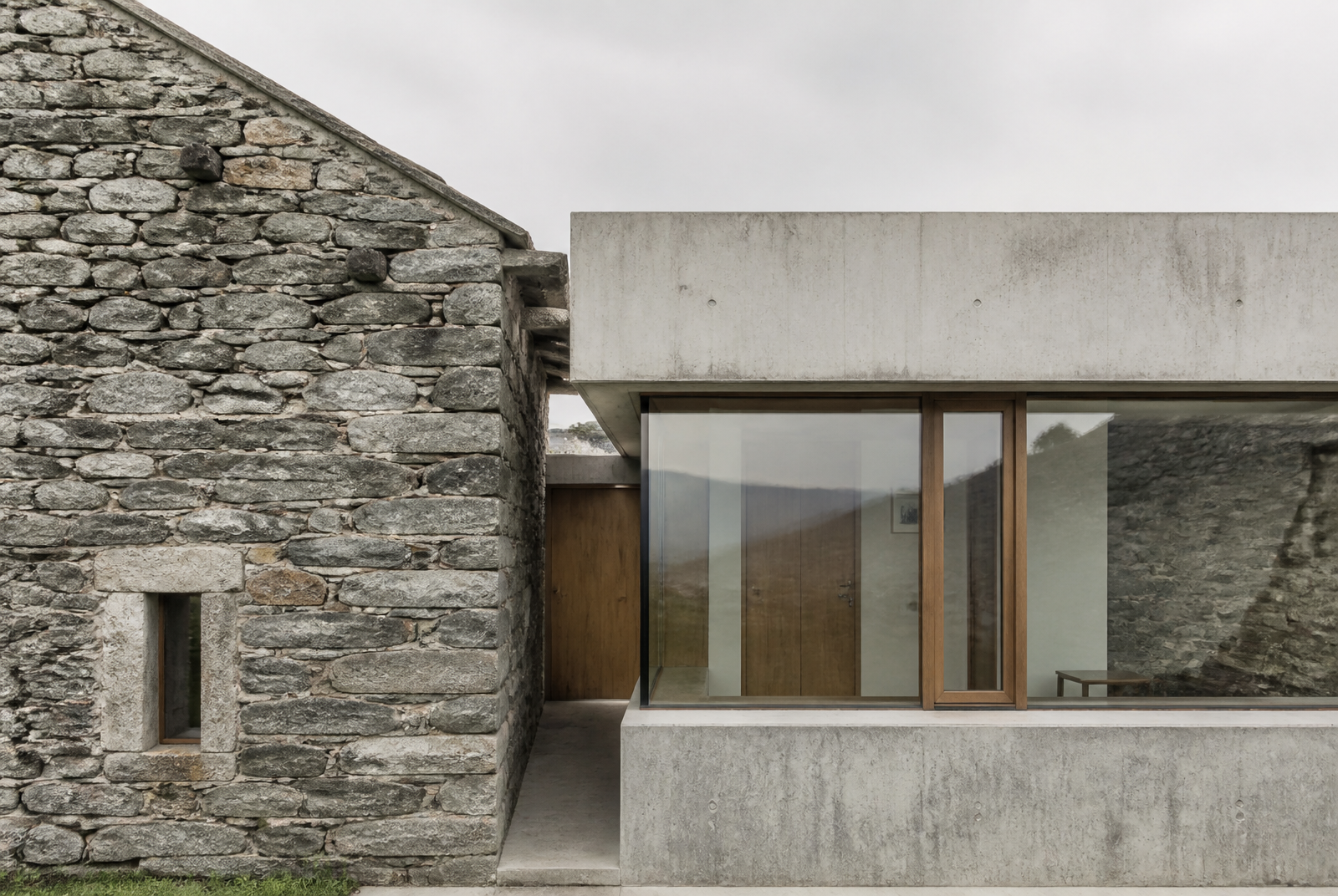
The Present Nature of the Past — Tradition as a Field of Knowledge
In architecture, tradition is often treated as a formal inheritance. Historical images are repeated, familiar forms reproduced. But this approach overlooks the real value of tradition.
The concept of the "present nature of the past" frees tradition from being a frozen reference; it proposes reading the past as a system that still operates today. Vernacular architecture, which defines local and everyday building practices, is not defined by an architect's name but by structures shaped by climate, material and ways of living. For this reason, vernacular architecture is not a nostalgic archive but a powerful source of data for contemporary architecture. Continuity can be established when it is the logic of the past — not its form — that is carried into the present.
The Tension Between Simplicity and Richness
A striking contradiction exists in current architectural production: buildings appear simple, yet are built through complex systems. This raises cost while also weakening spatial legibility.
Poetics in architecture, however, seeks complexity not in its tools but in experience. Simple, rational systems often produce more powerful spaces. Richness emerges not from a variety of materials but from the clarity of decisions. This approach does not reject technology, nor does it place technology at the centre. It uses technology only to the extent that it strengthens context. Technology thus becomes part of continuity, not of spectacle.
What Does Poetics in Architecture Change?
Poetics in architecture is neither a stylistic proposal nor a promise about the future. It is, rather, an invitation to rethink what architecture knows and how it knows it. Today architecture is passing through a period rich in tools. Yet this richness often fails to multiply meaning — on the contrary, it produces distraction. At this point, poetics ceases to be an aesthetic preference and becomes a mechanism of elimination.
- It excludes the unnecessary
- It places context at the centre
- It turns space back into a field of intellectual production
- It builds deep spatial experience with limited means
Architecture that can read the present nature of the past, that can build deep spaces with simple means, and that sees context as an active field of knowledge, produces poetics naturally. This poetics is architecture's quiet but enduring power.